
MERCURIUS™
Total Plant BRB-seq Kits
for cost-effective plant total RNA-seq
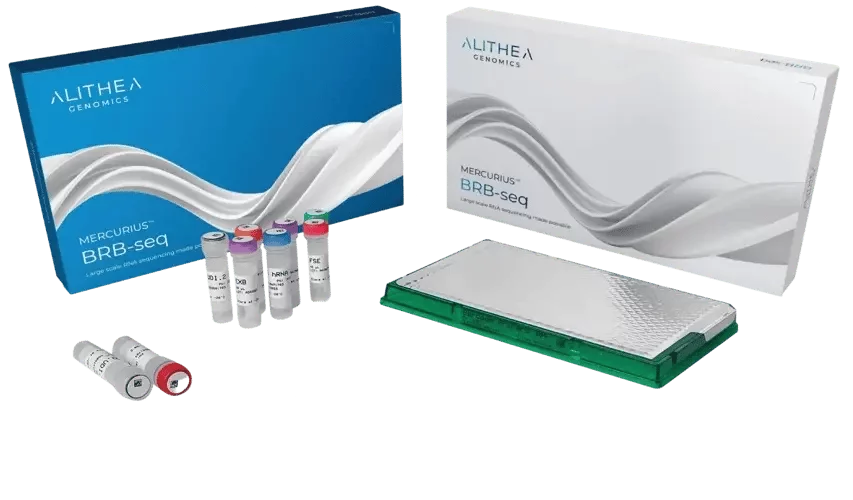
MERCURIUS™ Total Plant BRB-seq combines plant-focused rRNA depletion, full-length total RNA sequencing, and early sample multiplexing for purified plant RNA samples.
Multiplexed
total RNA
Full-length transcript coverage
Plant-focused rRNA depletion
One-day library prep workflow
Product Overview
MERCURIUS™ Total Plant BRB-seq is a plant total RNA-seq kit for purified plant RNA samples, designed to support scalable whole-transcriptome profiling across plant research, crop science, and agrochemical R&D.
Built on Alithea Genomics’ BRB-seq technology, the workflow combines plant-focused rRNA depletion, early sample barcoding, and multiplexing of up to 96 samples in a single tube. The kit captures full-length coding and non-coding transcript information, supporting applications such as crop stress response, pathogen surveillance, plant protection product testing, herbicide toxicity studies, biomarker discovery, and plant genome annotation.
2M reads/sample
Applications for plant total RNA-seq
MERCURIUS™ Total Plant BRB-seq is designed for plant transcriptomics studies where researchers need scalable, cost-effective total RNA-seq with full-length transcript coverage.
- Crop stress and disease response
Profile transcriptome-wide responses to drought, heat, nutrient stress, infection, or other biological and environmental pressures. - Pathogen surveillance and viral detection
Support plant health monitoring and disease research by capturing broader RNA signatures from purified plant RNA samples. - Plant protection product testing
Study how crops respond to agrochemical treatments, including plant protection products, herbicides, and other compounds used in agricultural R&D. - Biomarker discovery
Identify gene expression signatures linked to crop stress, disease resistance, treatment response, or desirable plant traits. - Plant genome annotation
Generate full-length transcript information to support transcript discovery, isoform analysis, and improved genome annotation. - Crop and seed research
Compare gene expression across genotypes, varieties, tissues, treatments, or timepoints in breeding and crop improvement studies.
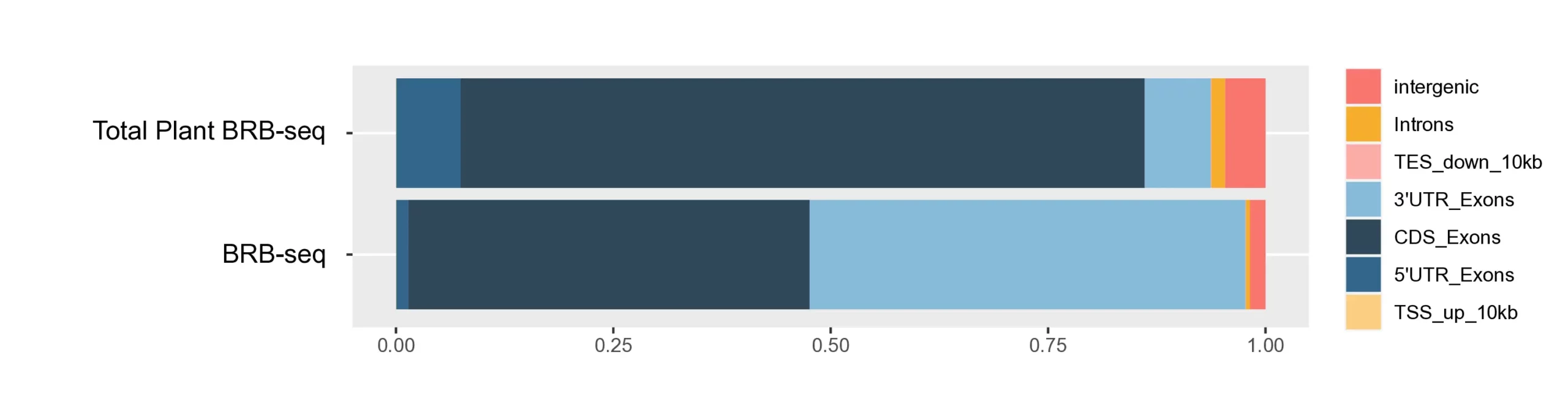
Total Plant BRB-seq has superior exonic read enrichment compared to BRB-seq in A. thaliana.
Stacked bar plots showing the distribution of mapped reads for Total Plant BRB-seq and BRB-seq in A. thaliana. A higher proportion of Total Plant BRB-seq reads map to coding (CDS) as expected for full-length methods.
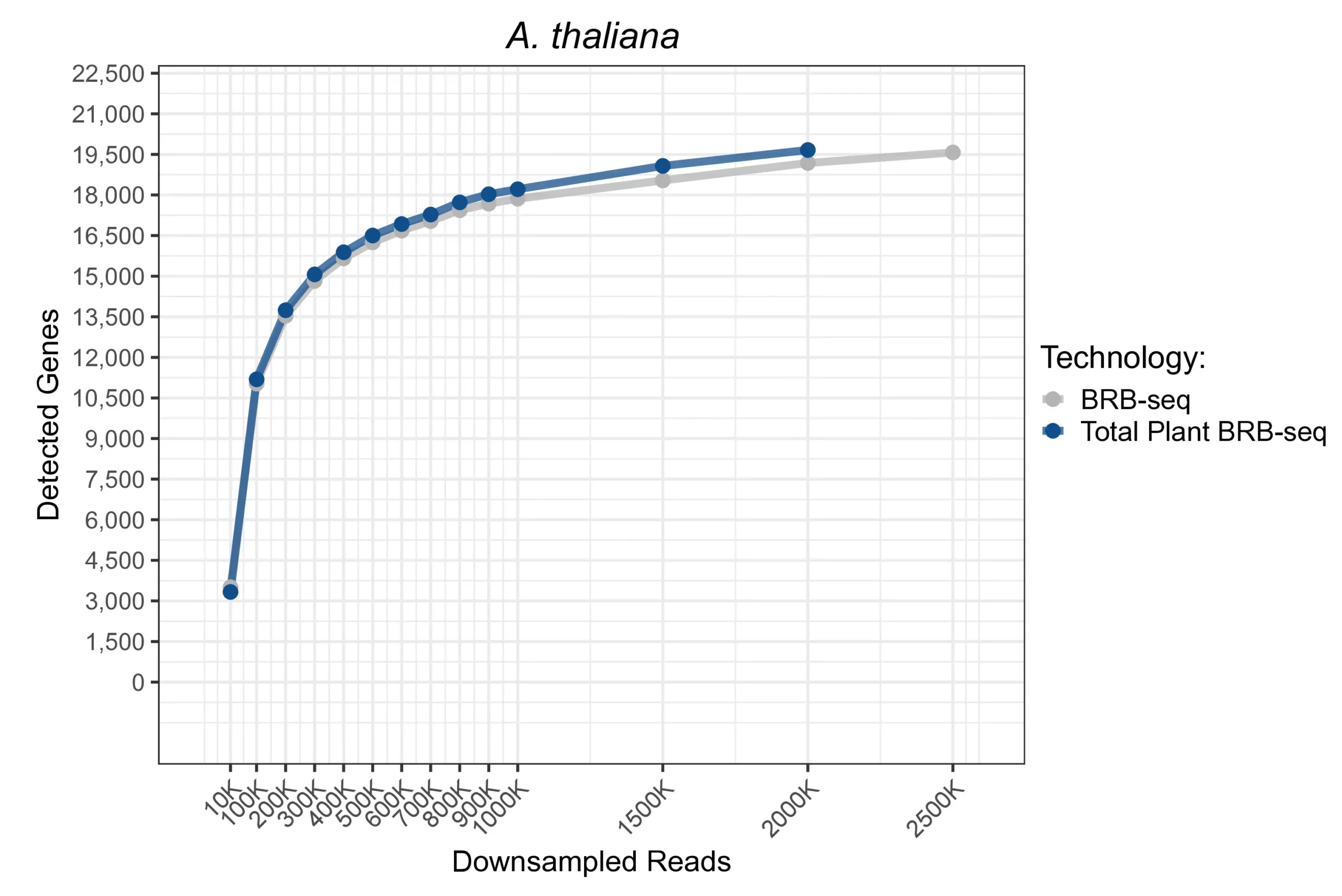
Total Plant BRB-seq detects similar numbers of genes to BRB-seq in A. thaliana across sequencing depths.
Saturation curves comparing Total Plant BRB-seq and BRB-seq gene detection across a range of downsampled read depths in A. thaliana. Total Plant BRB-seq detects a similar number of genes to BRB-seq across all downsampled sequencing depths, with both methods detecting around 18,000 genes at 1M reads per sample. The full-length information is especially beneficial for less well-annotated genomes, where 3’ UTR may not be complete.
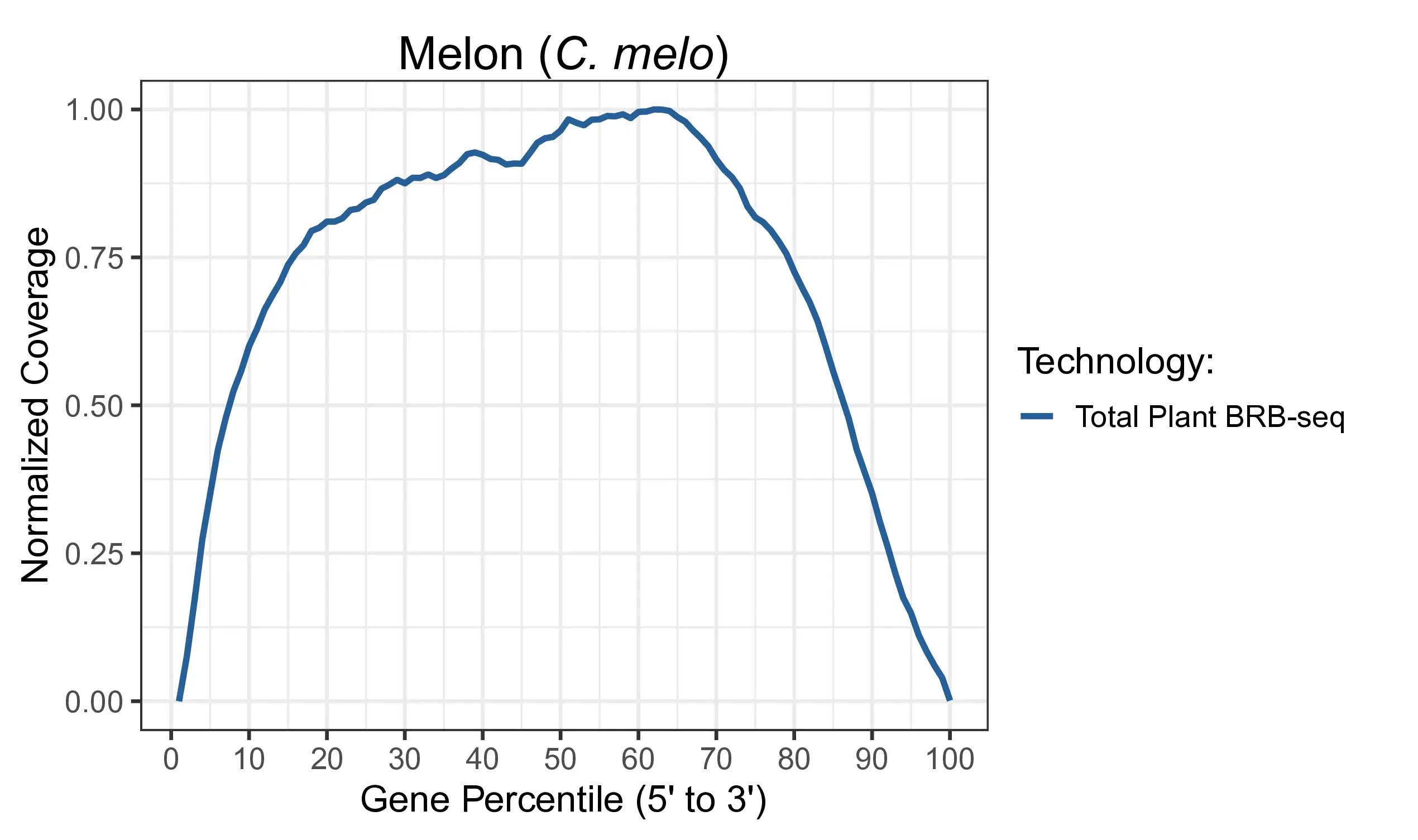
Total Plant BRB-seq achieves broad, full-length transcript coverage in melon (C. melo).
Normalized 5’ to 3’ read coverage across the transcript body for Total Plant BRB-seq in C. melo. Reads are distributed broadly across the full transcript length, confirming that Total Plant BRB-seq captures full-length transcript information rather than the 3′-bias associated with standard poly-A enrichment methods like BRB-seq.
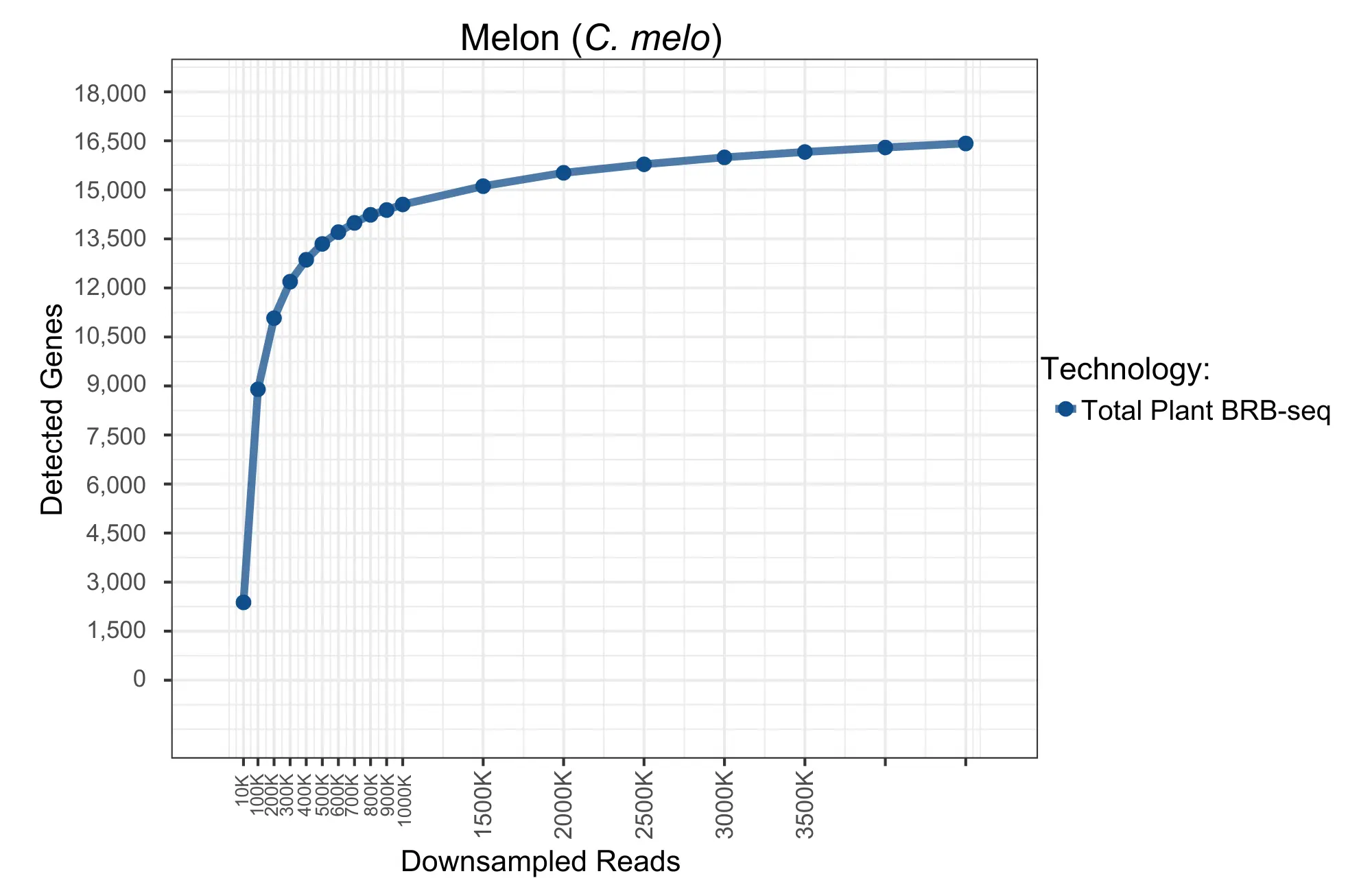
Total Plant BRB-seq detects almost 15,000 genes in melon (C. melo) at 1M reads per sample.
Gene detection saturation curve for Total Plant BRB-seq in C. melo, with detected genes as a function of downsampled read depth. Gene detection increases rapidly below 500K reads per sample, demonstrating broad coverage of the C. melo transcriptome.
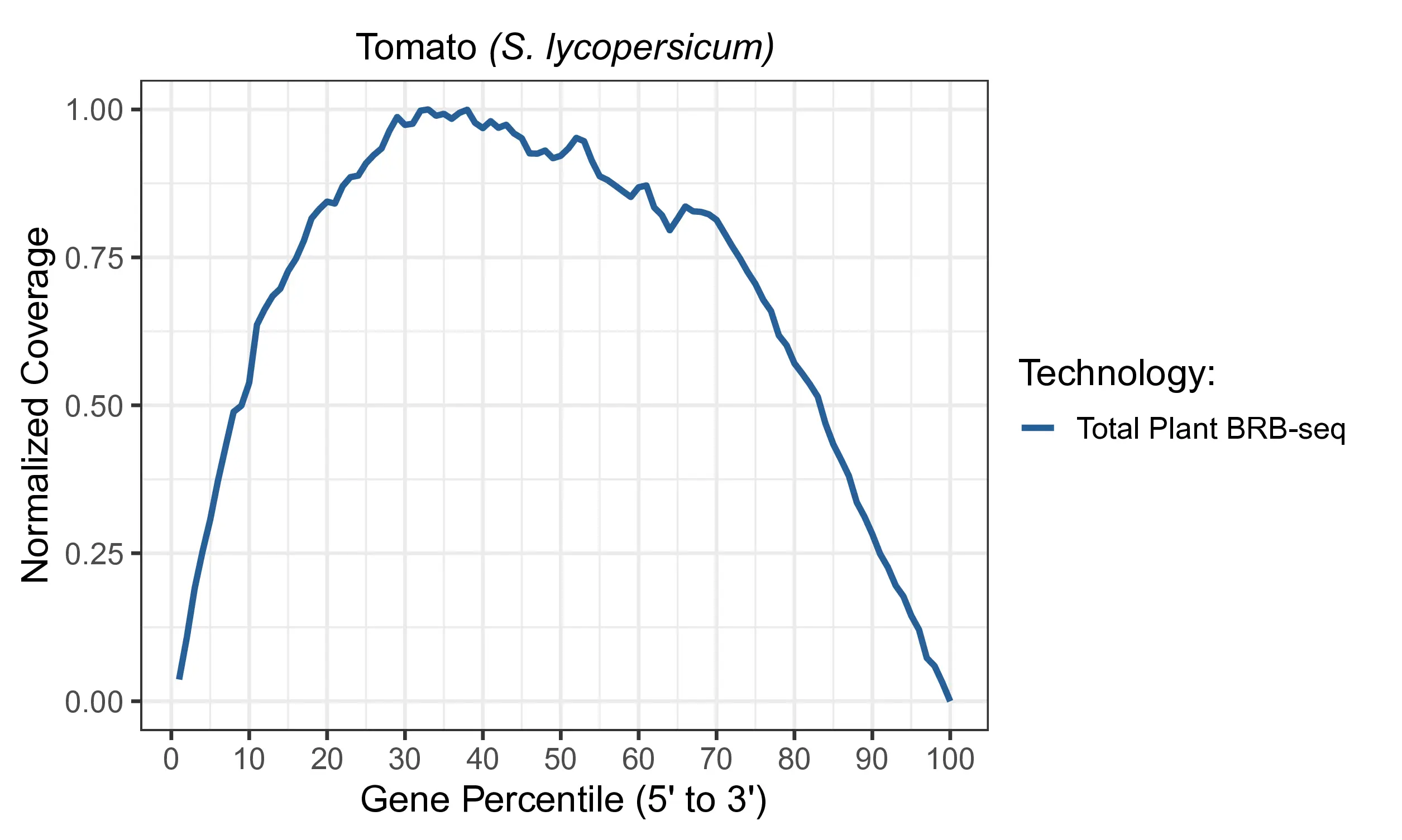
Total Plant BRB-seq achieves broad, full-length transcript coverage in tomato (S. lycopersicum).
Normalized 5’ to 3’ read coverage across the transcript body for Total Plant BRB-seq in S. lycopersicum. Reads are distributed broadly across the full transcript length, confirming that Total Plant BRB-seq captures full-length transcript information rather than the 3′-bias associated with standard poly-A enrichment methods like BRB-seq.
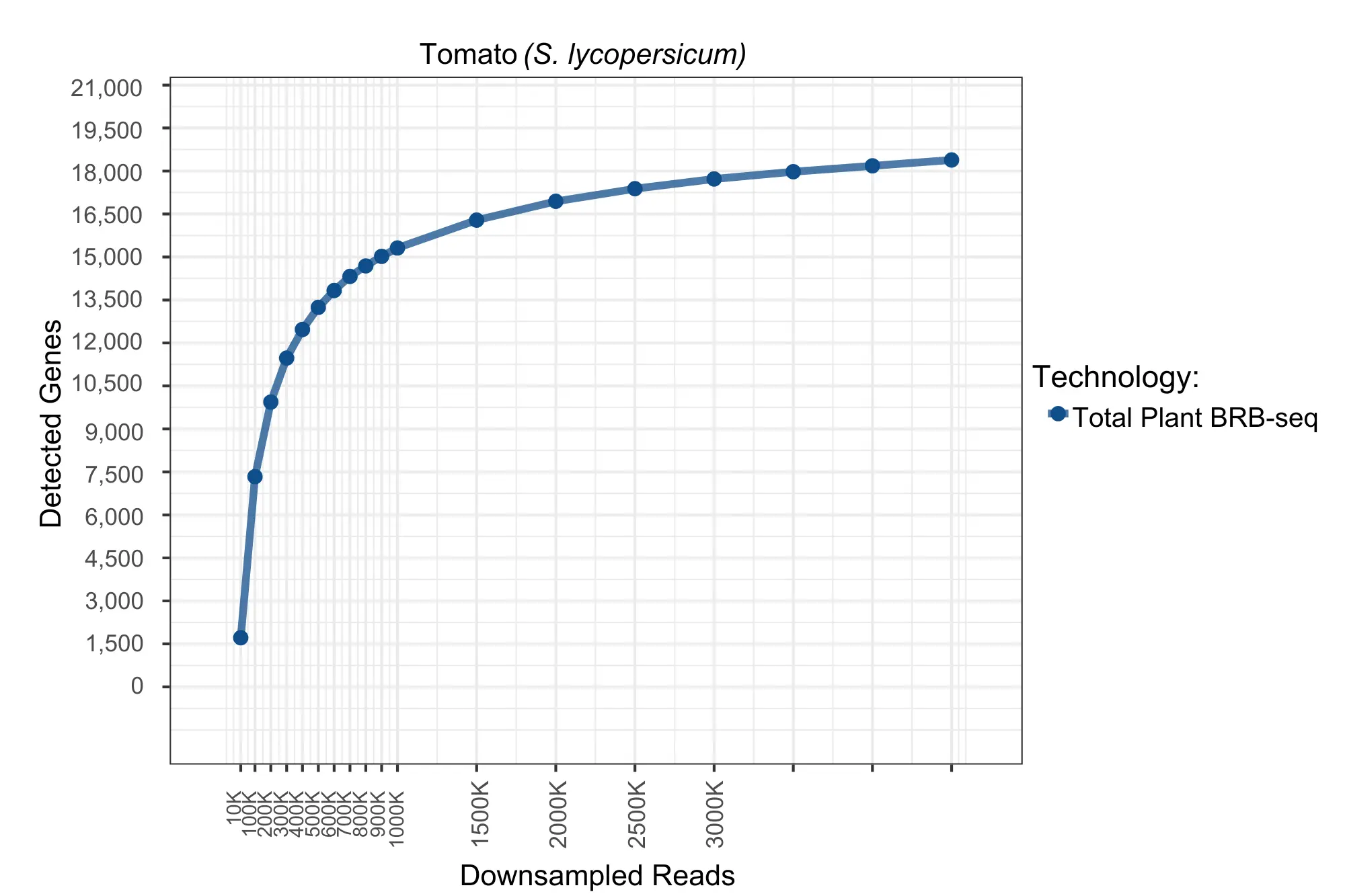
Total Plant BRB-seq detects over 15,000 genes in tomato (S. lycopersicum) at 1M reads per sample.
Gene detection saturation curve for Total Plant BRB-seq in S. lycopersicum, with detected genes shown as a function of downsampled read depth. Gene detection increases rapidly below 500K reads per sample and plateaus near saturation of approximately 16,500 genes at 4.5M reads.
Product documentation
Publications
- 3' BRB-seq, BRB-seq
Larissa Carvalho Costa, Christopher Gottschalk, Davis M. Upchurch, Oscar P. Hurtado-Gonzales, Ben N. Mansfeld, Alan Yocca, Lauren Whitt, Cheryl Vann, Gennaro Fazio
- 3' BRB-seq, BRB-seq
Stéphanie Boder‐Pasche, Mustafa Demir, Sarah Heub, Manon Garzuel, Réal Ischer, Daniel Migliozzi, Siegfried Graf, Noa Schmid, H. Baris Atakan, Daria Gudkova, Daniel Alpern, Riccardo Dainese, Bart Deplancke, Gilles Weder
- 3' BRB-seq, BRB-seq
Maxine Leonardi, Yves Paychère, Felix Naef.
Application
Equipment compatibility
Species compatibility
Available formats
Shipping conditions
Storage conditions
What is the maximum number of pools I can prepare with one kit?
Each kit includes 4 Unique Dual Index (UDI) pairs, so you can prepare up to 4 indexed libraries (pools) per kit.
What’s the RNA input range and quality requirement?
The tested input range is 100 pg to 100 ng total RNA per well. For best results (library complexity + uniformity), aim for 10–100 ng per well, and pool at least 8 wells per library.
Because Total BRB-seq uses early multiplexing, it’s important that RNA quantity and quality are consistent across samples (e.g., RIN > 7, 260/230 > 1.5, and ~±10% input uniformity).
What does “Total” mean in Total BRB-seq?
Total BRB-seq is designed for total RNA sequencing (not just mRNA), including coding and non-coding transcripts, and includes an rRNA depletion step prior to library prep.
What sequencing depth should I plan for?
We recommend 3-5 million reads for gene detection and >10 million reads for isoform and transcript analysis.
Does bioinformatic processing differ from standard bulk RNA-seq?
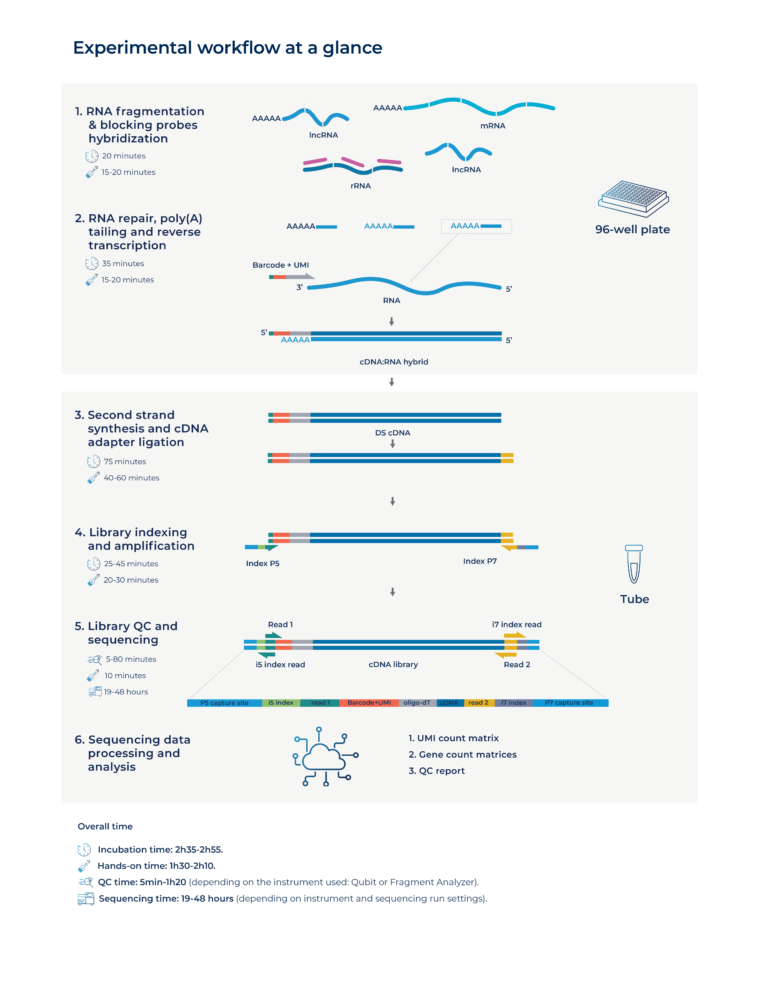
Yes, there is one extra step: after standard index demultiplexing, you demultiplex by sample barcodes to generate per-sample gene/transcript count outputs. The workflow supports producing outputs like UMI count matrices, gene count matrices, and a QC report.
Where do I find the barcode sequences for demultiplexing?
Go to the “Resources” section of this page and click on the button to download the barcode files for the product you are using.
Can I run Total BRB-seq as a service instead of in-house?
Yes. If you are not ready to run kits internally, Alithea can run the workflow and deliver FASTQ files, gene count matrices, and analysis report files.
Ask your question:
Kit name
Catalog number
preps
pairs
MERCURIUS™ Total Plant BRB-seq library prep kit (96 preps)
MERCURIUS™ Total Plant BRB-seq library prep kit (4x96 preps)
* Contact us to inquire about compatibility with other species.
Accessories
Product
Catalog Number
MERCURIUS™ UDI X-Leap Expansion module
MERCURIUS™ Full-Length Post-Pooling Preparation Module (4 libraries)
Ordering tip
Each kit includes 4 UDI pairs. Add the expansion module if you need more unique indexes (total 16 UDI pairs available).
Relevant blogs
August 25, 2025
Determining the most suitable transcriptomic technology to drive your large-scale compound screen, clinical study, or to assess a panel of genetic perturbations can be a…
August 25, 2025
‘High-throughput’ in sequencing refers to the amount of DNA molecules read at the same time. Technologies are now capable of sequencing many fragments of DNA…
May 9, 2025
With a growing number of published 3’ mRNA-seq methods now available, researchers have more choices than ever for high-throughput and cost-effective transcriptomic screening. While broadly…