ON-DEMAND WEBINAR
Drug discovery teams are generating more screening data than ever, but many standard readouts still lack the biological depth needed to connect compounds to the mechanism of action, toxicity, and downstream decision-making. At the same time, AI-driven discovery programs require large, standardized perturbation datasets that capture how compounds affect cellular biology across doses, models, and conditions.
In this early access launch webinar, Alithea Genomics will introduce MERCURIUS™ 1536 DRUG-seq, a whole transcriptome profiling workflow designed for applications where 384-well transcriptomic screening becomes difficult to scale or where sample material is limited, e.g., with non-proliferating primary cells or iPSCs. By bringing broad transcriptomic readouts into the density and throughput of modern screening, 1536 DRUG-seq enables discovery teams to generate reusable compound-response datasets for primary screening, mechanism-of-action discovery, toxicity detection, compound prioritization, and AI/ML model development.
Arctoris will add the perspective of how fully automated experimental execution with its proprietary platform, UlyssesⓇ, enables high-density transcriptomic screening to move from technical feasibility to practical drug discovery application. Leveraging fully automated workflows for cell preparation, cell seeding, compound treatment, incubation, and sample preparation in 1536-well format, Arctoris enables reproducible profiling across multiple human cell lines, input conditions and replicates.
Join us to learn how 1536 DRUG-seq expands the practical scale of whole transcriptome profiling, reduces plate count and batch burden, and supports the creation of standardized perturbation datasets that increase in value across screening campaigns.
Key topics you will learn
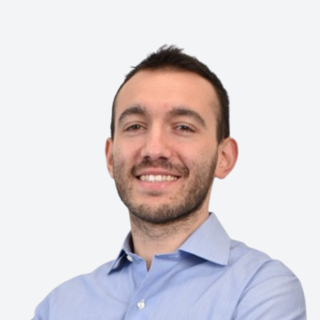
Riccardo is the CBO and co-founder of Alithea Genomics.
Before that, he completed his PhD in Bioengineering and Microfluidics at the Swiss Federal Institute of Technology (EPFL) in the Laboratory of Systems Biology and Genetics run by Prof. Bart Deplancke.
During his PhD Riccardo has worked on and co-developed a number of microvalve-based and droplet-based microfluidic devices with genomic applications, such as Smile-seq, FloChIP, DisCO all of which have been patented separately and published in top-tier journals such as Nature Methods and PNAS.
Before his PhD, Riccardo obtained a Master’s degree in Nanotechnology at Chalmers University (Goteborg, Sweden) and a Bachelor’s in Biomedical Engineering at the Politecnico di Torino (Italy).
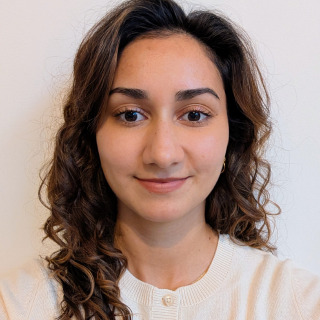
Maya Wilson is an expert in in vitro biology, high-throughput screening, and automated assay development, with deep expertise in complex human cell models, metabolic disease biology, CRISPRi screening, and assay miniaturisation. Before joining Arctoris, Maya worked in Novo Nordisk’s Screening and Automation team, where she ran high-throughput screening campaigns in complex metabolic disease models and developed advanced automated workflows. Her work included designing miniaturised protocols that increased throughput using 1536-well scale, building SOPs and training materials for automated platforms, and applying DoE-driven assay development to improve experimental quality and scalability. Today, at Arctoris, Maya applies her combined biology and automation expertise to advance faster, more reproducible drug discovery through sophisticated automated workflows and complex disease-relevant models.